When a wildfire tears through a community, the aftermath triggers a high-stakes race against the clock. For restoration contractors, managing the logistical surge of residential and commercial property recovery is incredibly challenging. Between moving crews across dynamic disaster zones and deploying hundreds of high-value assets like HEPA air scrubbers, dehumidifiers, and hydroxyl generators, operational visibility can vanish instantly.
During a wildfire emergency, chaotic logistics destroy profitability. Equipment gets left behind, trucks sit idle in staging areas, and clients demand updates that dispatchers cannot provide.
Implementing real-time fleet and asset tracking is no longer an operational luxury for restoration professionals; it is a critical necessity to protect field margins, accelerate property intake, and win the trust of commercial and residential property owners.
“Blind” deployments in Disaster Zones can represent a high cost for your restoration operations
There is a big difference between managing a restoration project in a standard residential flood vs a wildfire disaster. Instead of tracking just one or two technicians, contractors suddenly face the deployment of multiple teams across vast regions affected by smoke, ash, and structural damage.
Without real-time asset tracking, serious operational bottlenecks occur:
These issues do more than slow down response times.
They directly affect margins, customer confidence, and claim documentation.
- Equipment Hoarding and Loss: Air scrubbers and thermal hygrometers are moved from truck to truck or left in jobsites without paper trails. Replacing lost equipment in mid-crisis drains cash flow.
- Fuel and Logistics Inefficiencies: Trucks might travel back and forth to a central warehouse because dispatch cannot verify if a nearby team has the necessary structural drying gear on hand.
- Staging Delays: Crews sit waiting at roadblocks or incident command check-points because dispatch lacks the live traffic and boundary data needed to reroute vehicles safely around active perimeters.
How can Fleet and Asset Tracking improves Emergency Operations?
When field operations are visible on a central dashboard, asset utilization is instantly maximized. Fleet tracking ensures that every truck, trailer, and tool is accounted for from the moment it leaves the yard to the moment the job closes.
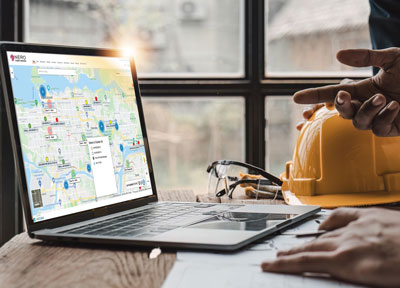
Your operations will benefit with:
- Full visibility. Reduce assets losses getting the best ROI of your investment.
- Dispatch the right crew faster. Live tracking provides dispatchers with an instant view of the closest available crew with the correct equipment profile.
- Accurate Data and Reports, support smoother insurance documentation. Automated documentation eliminates billing disputes, speeds up claim approvals, and builds strong credibility with major insurance adjusters
- Strengthen field team safety in wildfire unpredictable behavior conditions with exact GPS coordinates. Fleet tracking provides a critical safety layer for field teams If communication lines drop, dispatchers can view the exact location every crew vehicle. Route optimization tools allow coordinators to send emergency evacuation pathways directly to drivers, steering them away from active fire lines and hazardous road conditions.
Managing a wildfire restoration response will always be challenging, but it does not have to be disorganized.
By integrating real-time fleet and asset tracking into operations, contractors replace guesswork with actionable, data-driven precision. Don’t want for the next wildfire deployment to find the gaps in your supply chain.
Schedule a live demo.
Let us help you protect your assets, your crews, and your bottom line.
Fill out our form and we’ll contact you soon!
"*" indicates required fields